• Subscribe Now
  • Today In History
  • Wars & Events
    • The Russia–Ukraine War
    • American Revolution
    • The Civil War
    • World War I
    • World War II
    • Cold War
    • Korean War
    • Vietnam War
    • Global War on Terror
    • Movements
      • Women’s Rights
      • Civil Rights
      • Abolition of Slavery
  • Famous People
    • U.S. Presidents
    • World Leaders
    • Military Leaders
    • Outlaws & Lawmen
    • Activists
    • Artists & Writers
    • Celebrities
    • Scientists
    • Philosophers
  • Eras
    • Modern Era
      • 2000s
      • 1900s
      • 1800s
    • Early Modern
      • 1700s
      • 1600s
      • 1500s
    • The Middle Ages
    • Classical Era
    • Prehistory
  • Topics
    • Black History
    • Slavery
    • Women’s History
    • Prisoners of War
    • Firsthand Accounts
    • Technology & Weaponry
    • Aviation & Spaceflight
    • Naval & Maritime
    • Politics
    • Military History
    • Art & Literature
    • News
    • Entertainment & Culture
    • Historical Figures
    • Photography
    • Wild West
    • Social History
    • Native American History
  • Magazines
    • American History
    • America’s Civil War
    • Aviation History
    • Civil War Times
    • Military History
    • Military History Quarterly
    • Vietnam
    • Wild West
    • World War II
  • Newsletters
  • Podcasts
  • Privacy Policy
  • Terms of Service
  • Facebook
  • Twitter
  • Instagram
  • YouTube
Skip to content
  • Privacy Policy
  • Terms of Service
  • Facebook
  • Twitter
  • Instagram
  • YouTube
HistoryNet

HistoryNet

The most comprehensive and authoritative history site on the Internet.

  • Subscribe Now
  • Today In History
  • Wars & Events
    • The Russia–Ukraine War
    • American Revolution
    • The Civil War
    • World War I
    • World War II
    • Cold War
    • Korean War
    • Vietnam War
    • Global War on Terror
    • Movements
      • Women’s Rights
      • Civil Rights
      • Abolition of Slavery
  • Famous People
    • U.S. Presidents
    • World Leaders
    • Military Leaders
    • Outlaws & Lawmen
    • Activists
    • Artists & Writers
    • Celebrities
    • Scientists
    • Philosophers
  • Eras
    • Modern Era
      • 2000s
      • 1900s
      • 1800s
    • Early Modern
      • 1700s
      • 1600s
      • 1500s
    • The Middle Ages
    • Classical Era
    • Prehistory
  • Topics
    • Black History
    • Slavery
    • Women’s History
    • Prisoners of War
    • Firsthand Accounts
    • Technology & Weaponry
    • Aviation & Spaceflight
    • Naval & Maritime
    • Politics
    • Military History
    • Art & Literature
    • News
    • Entertainment & Culture
    • Historical Figures
    • Photography
    • Wild West
    • Social History
    • Native American History
  • Magazines
    • American History
    • America’s Civil War
    • Aviation History
    • Civil War Times
    • Military History
    • Military History Quarterly
    • Vietnam
    • Wild West
    • World War II
  • Newsletters
  • Podcasts
Posted inReview

WWII Review: WWII & NYC

by Gene Santoro4/25/20175/11/2017
Share This Article

WWII & NYC

 At the New-York Historical Society Museum and Library, through May 27, 2013. General admission $15.

 New York City was one of World War II’s epicenters. It was the largest port on the planet. Its manufacturing output was unmatched. Most North Atlantic convoys jumped off from its spacious natural harbor. Its Brooklyn Navy Yard was bigger than any other. It produced 90 percent of the war’s penicillin. Its artists, writers, and advertising wizards spooled out propaganda at sites like Astoria’s Paramount Studios. The Office of Strategic Services was headquartered in Rockefeller Center. In 1939, the Manhattan Project that created the atomic bomb was born at Columbia University.

WWII & NYC bites into the wartime Big Apple with dazzling breadth and engaging flair. It is befittingly big, comprising more than 300 images and objects (including the Manhattan Project’s original 16.5-foot-long cyclotron, and the only surviving vial of war-era penicillin), as well as 13 short films and several interactive stations that add depth and context to the displays. This multitiered approach allows you to deal as you choose with the complex, shifting textures of New York at war.

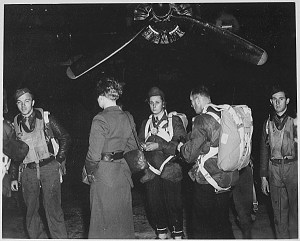
The exhibition is divided into four major sections. “War of Opinions” (1933–41) showcases prewar controversies roiling within the multiethnic city, such as isolationism, Axis sympathies, racism, refugees, and the economy. “NY Home Front” (1942–45) embraces daily-life artifacts (from M&Ms packets to a Maidenform ad casting its bra as “a vital necessity to women at work”), the city’s protective necklace of military bases, manufactured plethora of war materiel, fears of Nazi bombers, and a “Traveler’s Aid” mockup depicting the Big Apple’s allures for military personnel on leave. “Going to War” (1942–45) scans WAVES training in the Bronx and Signal Corps bases in Queens, and zeroes in on 13 representatives of the 900,000 New Yorkers who served—including artist Jacob Lawrence, salsa-music legend Tito Puente, and noir film director Samuel Fuller (The Big Red One). Finally, “Victory and Loss” chronicles jubilation in New York’s streets following Axis defeat, the return of masses of living and dead troops through its harbor, and its postwar roles as the world’s cultural capital and the home of the United Nations.

Within each section, display cases in thematic clusters organize the profusion of stuff into thought-provoking groups. One 1942 case houses a flier calling on black New Yorkers to join a march on Washington to demand an end to job segregation (the threat propelled FDR into desegregating the war industry), a photo of a Madison Square Garden rally to support the Soviet Union during its death struggle, a Time magazine cover of the charming Madame Chiang Kai-shek, and the program for a Jewish demonstration decrying the Holocaust at a time when Allied leaders and the media were ignoring it.

There are fascinating New York tidbits: why East River Drive was built on rubble from Bristol, England, how the Metropolitan Museum of Art’s armor department was crucial to the M1 helmet, how Katz’s Deli’s “Senda Salami” program aimed at feeding Jewish servicemen begat a new type of ammo, why Maidenform made pigeon vests for Signal Corps paratroopers.

Additional war artifacts pop up throughout the museum, so plan to wander. The new Caffè Storico serves snacks and meals from a stylish Italian menu. And just across the street spreads Central Park, now as then, Manhattan’s vibrant and varied 843-acre heart.


Originally published in the February 2013 issue of World War II. To subscribe, click here.
Share This Article
by Gene Santoro

more by Gene Santoro

    Dive deeper

    • Museums
    • New York City

    Citation information

    Gene Santoro (2/24/2026) WWII Review: WWII & NYC. HistoryNet Retrieved from https://historynet.com/wwii-review-wwii-nyc/.
    "WWII Review: WWII & NYC."Gene Santoro - 2/24/2026, https://historynet.com/wwii-review-wwii-nyc/
    Gene Santoro 4/25/2017 WWII Review: WWII & NYC., viewed 2/24/2026,<https://historynet.com/wwii-review-wwii-nyc/>
    Gene Santoro - WWII Review: WWII & NYC. [Internet]. [Accessed 2/24/2026]. Available from: https://historynet.com/wwii-review-wwii-nyc/
    Gene Santoro. "WWII Review: WWII & NYC." Gene Santoro - Accessed 2/24/2026. https://historynet.com/wwii-review-wwii-nyc/
    "WWII Review: WWII & NYC." Gene Santoro [Online]. Available: https://historynet.com/wwii-review-wwii-nyc/. [Accessed: 2/24/2026]

    Related stories

    Stories

    Celebrating the Legacy of the Office of Strategic Services 82 Years On

    From the OSS to the CIA, how Wild Bill Donovan shaped the American intelligence community.

    Buffalo Bill Cody
    Stories

    10 Pivotal Events in the Life of Buffalo Bill

    William Frederick Cody (1846-1917) led a signal life, from his youthful exploits with the Pony Express and in service as a U.S. Army scout to his globetrotting days as a showman and international icon Buffalo Bill.

    ww2-homefront-poster-war-bond
    Portfolio

    During the War Years, Posters From the American Homefront Told You What to Do — And What Not to Do

    If you needed some motivation during the war years, there was probably a poster for that.

    Booger Red Privett on horseback
    Feature

    The One and Only ‘Booger’ Was Among History’s Best Rodeo Performers

    Texan Sam Privett, the colorfully nicknamed proprietor of Booger Red’s Wild West, backed up his boast he could ride anything on four legs.

    HistoryNet
    • Facebook
    • Twitter
    • Instagram
    • YouTube

    “History is a guide to navigation in perilous times. History is who we are and why we are the way we are.”

    David McCullough, author of “1776”

    HistoryNet.com is brought to you by HistoryNet LLC, the world’s largest publisher of history magazines. HistoryNet.com contains daily features, photo galleries and over 25,000 articles originally published in our nine magazines.

    Our Magazines

    • American History
    • America’s Civil War
    • Aviation History
    • Civil War Times
    • Military History
    • Military History Quarterly
    • Vietnam
    • Wild West
    • World War II

    About Us

    • What Is HistoryNet.com?
    • Advertise With Us
    • Careers
    • Meet Our Staff!

    Stay Curious

    Subscribe to receive our weekly newsletter with top stories from master historians.

    sign me up!

    © 2026 HistoryNet.
    • Privacy Policy
    • Terms of Service