• Subscribe Now
  • Today In History
  • Wars & Events
    • The Russia–Ukraine War
    • American Revolution
    • The Civil War
    • World War I
    • World War II
    • Cold War
    • Korean War
    • Vietnam War
    • Global War on Terror
    • Movements
      • Women’s Rights
      • Civil Rights
      • Abolition of Slavery
  • Famous People
    • U.S. Presidents
    • World Leaders
    • Military Leaders
    • Outlaws & Lawmen
    • Activists
    • Artists & Writers
    • Celebrities
    • Scientists
    • Philosophers
  • Eras
    • Modern Era
      • 2000s
      • 1900s
      • 1800s
    • Early Modern
      • 1700s
      • 1600s
      • 1500s
    • The Middle Ages
    • Classical Era
    • Prehistory
  • Topics
    • Black History
    • Slavery
    • Women’s History
    • Prisoners of War
    • Firsthand Accounts
    • Technology & Weaponry
    • Aviation & Spaceflight
    • Naval & Maritime
    • Politics
    • Military History
    • Art & Literature
    • News
    • Entertainment & Culture
    • Historical Figures
    • Photography
    • Wild West
    • Social History
    • Native American History
  • Magazines
    • American History
    • America’s Civil War
    • Aviation History
    • Civil War Times
    • Military History
    • Military History Quarterly
    • Vietnam
    • Wild West
    • World War II
  • Newsletters
  • Podcasts
  • Privacy Policy
  • Terms of Service
  • Facebook
  • Twitter
  • Instagram
  • YouTube
Skip to content
  • Privacy Policy
  • Terms of Service
  • Facebook
  • Twitter
  • Instagram
  • YouTube
HistoryNet

HistoryNet

The most comprehensive and authoritative history site on the Internet.

  • Subscribe Now
  • Today In History
  • Wars & Events
    • The Russia–Ukraine War
    • American Revolution
    • The Civil War
    • World War I
    • World War II
    • Cold War
    • Korean War
    • Vietnam War
    • Global War on Terror
    • Movements
      • Women’s Rights
      • Civil Rights
      • Abolition of Slavery
  • Famous People
    • U.S. Presidents
    • World Leaders
    • Military Leaders
    • Outlaws & Lawmen
    • Activists
    • Artists & Writers
    • Celebrities
    • Scientists
    • Philosophers
  • Eras
    • Modern Era
      • 2000s
      • 1900s
      • 1800s
    • Early Modern
      • 1700s
      • 1600s
      • 1500s
    • The Middle Ages
    • Classical Era
    • Prehistory
  • Topics
    • Black History
    • Slavery
    • Women’s History
    • Prisoners of War
    • Firsthand Accounts
    • Technology & Weaponry
    • Aviation & Spaceflight
    • Naval & Maritime
    • Politics
    • Military History
    • Art & Literature
    • News
    • Entertainment & Culture
    • Historical Figures
    • Photography
    • Wild West
    • Social History
    • Native American History
  • Magazines
    • American History
    • America’s Civil War
    • Aviation History
    • Civil War Times
    • Military History
    • Military History Quarterly
    • Vietnam
    • Wild West
    • World War II
  • Newsletters
  • Podcasts
Posted inStories

The Secret and Controversial Attempt to Teach German POWs About Freedom

During the summer of 1944, the government launched a secret and ambitious effort to influence the nearly 380,000 Germans imprisoned in the United States.
by Ronald H. Bailey9/11/20087/13/2022
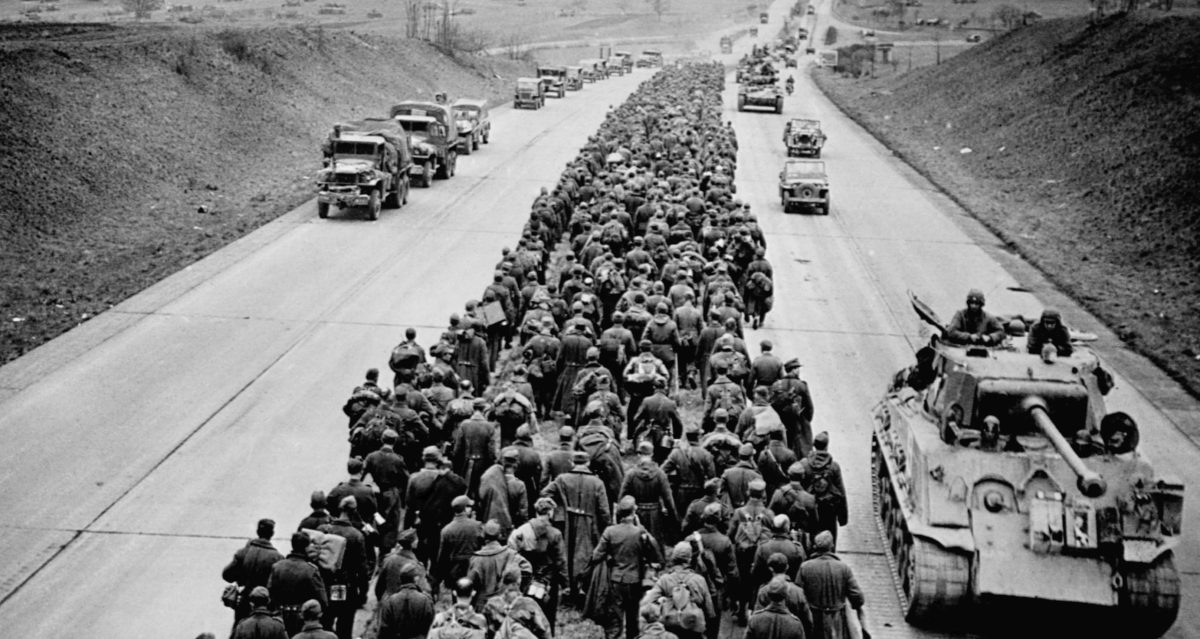
4 May 1945: Germany, Thousands of German prisoners march along a modern German superhighway while their allied captors travel in tanks, trucks, and jeeps. (CORBIS)
Share This Article

School itself consisted of nonstop lectures on the United States Constitution and other aspects of democracy, along with hour-long open discussions, films, and filmstrips. The teaching staff included eleven prisoners from the Factory and sixteen graduates of Getty and Wetherill. The commandant, Col. Alpheus Smith, set the tone in his disarmingly honest opening address. “He didn’t pull his punches,” recalled one prisoner. “He admitted, much to our shocked surprise, that American democracy wasn’t perfect.” One student later remembered the school’s emphasis that the prisoners must learn to think for themselves. An admonition from a teacher stuck in his mind: “It is a sin against the Holy Ghost to let others think and decide for you.”

The twelfth and final cycle ended on April 5, 1946, and the last of 23,147 graduates headed home. Fort Eustis marked the end of the entire reeducation program. One historian later adjudged it “a bold experiment conducted against heavy odds by a relatively small band of Americans hoping to influence the future of Germany.” Other writers, less kind, would call it an exercise in “well-meaning incompetence” and “clearly a fiasco.”

The War Department attempted to measure the impact of the program in a poll of 22,153 departing prisoners. According to the poll, about 74 percent left with an appreciation of the value of democracy. Some 33 percent said they were anti-Nazi and pro-democratic. Only 10 percent remained militantly Nazi.

Neither defenders nor critics could agree on the meaning and accuracy of these results. After all, with the destruction of the Nazi regime, comparatively few Germans were eager to cling to an ideology that had failed so dramatically.

Perhaps the most decisive and lasting lesson in democracy occurred as the prisoners returned to their devastated homeland and confronted the legacy of Nazism. Capt. Robert Kunzig of the Special Projects Division, who accompanied the first shipload of Fort Eustis graduates on their journey home, described the scene as their train crossed into Germany: “I was conscious of a tenseness in the men. I could see it in their eyes. They crowded to the doors for that first glimpse. Then they saw. They saw, and they’ll remember for all time. Ruin, desolation, and destruction were framed in that open door.”

Whatever the impact of the reeducation program, the sight of that ruin was the impetus for change that would transform many of the returning POWs—and postwar Germany. “Physical destruction, not a new enlightenment,” concluded Kunzig, “had obliterated the complex social conditions and ideological values that had nurtured National Socialism.”


This article originally appeared in the August/September 2008 issue of World War II magazine.
Pages: 1 2 3 4 5 6 7
Share This Article
by Ronald H. Bailey

more by Ronald H. Bailey

    Dive deeper

    • Nazis
    • Prisoners of war (POWs)
    • Psychology

    Citation information

    Ronald H. Bailey (2/25/2026) The Secret and Controversial Attempt to Teach German POWs About Freedom. HistoryNet Retrieved from https://historynet.com/the-secret-and-controversial-attempt-to-teach-german-pows-about-freedom/.
    "The Secret and Controversial Attempt to Teach German POWs About Freedom."Ronald H. Bailey - 2/25/2026, https://historynet.com/the-secret-and-controversial-attempt-to-teach-german-pows-about-freedom/
    Ronald H. Bailey 9/11/2008 The Secret and Controversial Attempt to Teach German POWs About Freedom., viewed 2/25/2026,<https://historynet.com/the-secret-and-controversial-attempt-to-teach-german-pows-about-freedom/>
    Ronald H. Bailey - The Secret and Controversial Attempt to Teach German POWs About Freedom. [Internet]. [Accessed 2/25/2026]. Available from: https://historynet.com/the-secret-and-controversial-attempt-to-teach-german-pows-about-freedom/
    Ronald H. Bailey. "The Secret and Controversial Attempt to Teach German POWs About Freedom." Ronald H. Bailey - Accessed 2/25/2026. https://historynet.com/the-secret-and-controversial-attempt-to-teach-german-pows-about-freedom/
    "The Secret and Controversial Attempt to Teach German POWs About Freedom." Ronald H. Bailey [Online]. Available: https://historynet.com/the-secret-and-controversial-attempt-to-teach-german-pows-about-freedom/. [Accessed: 2/25/2026]

    Related stories

    Stories

    Celebrating the Legacy of the Office of Strategic Services 82 Years On

    From the OSS to the CIA, how Wild Bill Donovan shaped the American intelligence community.

    ww2-homefront-poster-war-bond
    Portfolio

    During the War Years, Posters From the American Homefront Told You What to Do — And What Not to Do

    If you needed some motivation during the war years, there was probably a poster for that.

    ww2-termoli-italy-pow-boat
    Feature

    An SAS Rescue Mission Mission Gone Wrong

    When covert operatives went into Italy to retrieve prisoners of war, little went according to plan.

    ww2-505-parachute-infantry
    Feature

    Could These American Paratroopers Stop the Germans from Reaching Utah Beach on D-Day?

    The peaceful French countryside around La Fiere Bridge erupted into a desperate firefight on June 6, 1944.

    HistoryNet
    • Facebook
    • Twitter
    • Instagram
    • YouTube

    “History is a guide to navigation in perilous times. History is who we are and why we are the way we are.”

    David McCullough, author of “1776”

    HistoryNet.com is brought to you by HistoryNet LLC, the world’s largest publisher of history magazines. HistoryNet.com contains daily features, photo galleries and over 25,000 articles originally published in our nine magazines.

    Our Magazines

    • American History
    • America’s Civil War
    • Aviation History
    • Civil War Times
    • Military History
    • Military History Quarterly
    • Vietnam
    • Wild West
    • World War II

    About Us

    • What Is HistoryNet.com?
    • Advertise With Us
    • Careers
    • Meet Our Staff!

    Stay Curious

    Subscribe to receive our weekly newsletter with top stories from master historians.

    sign me up!

    © 2026 HistoryNet.
    • Privacy Policy
    • Terms of Service