• Subscribe Now
  • Today In History
  • Wars & Events
    • The Russia–Ukraine War
    • American Revolution
    • The Civil War
    • World War I
    • World War II
    • Cold War
    • Korean War
    • Vietnam War
    • Global War on Terror
    • Movements
      • Women’s Rights
      • Civil Rights
      • Abolition of Slavery
  • Famous People
    • U.S. Presidents
    • World Leaders
    • Military Leaders
    • Outlaws & Lawmen
    • Activists
    • Artists & Writers
    • Celebrities
    • Scientists
    • Philosophers
  • Eras
    • Modern Era
      • 2000s
      • 1900s
      • 1800s
    • Early Modern
      • 1700s
      • 1600s
      • 1500s
    • The Middle Ages
    • Classical Era
    • Prehistory
  • Topics
    • Black History
    • Slavery
    • Women’s History
    • Prisoners of War
    • Firsthand Accounts
    • Technology & Weaponry
    • Aviation & Spaceflight
    • Naval & Maritime
    • Politics
    • Military History
    • Art & Literature
    • News
    • Entertainment & Culture
    • Historical Figures
    • Photography
    • Wild West
    • Social History
    • Native American History
  • Magazines
    • American History
    • America’s Civil War
    • Aviation History
    • Civil War Times
    • Military History
    • Military History Quarterly
    • Vietnam
    • Wild West
    • World War II
  • Newsletters
  • Podcasts
  • Privacy Policy
  • Terms of Service
  • Facebook
  • Twitter
  • Instagram
  • YouTube
Skip to content
  • Privacy Policy
  • Terms of Service
  • Facebook
  • Twitter
  • Instagram
  • YouTube
HistoryNet

HistoryNet

The most comprehensive and authoritative history site on the Internet.

  • Subscribe Now
  • Today In History
  • Wars & Events
    • The Russia–Ukraine War
    • American Revolution
    • The Civil War
    • World War I
    • World War II
    • Cold War
    • Korean War
    • Vietnam War
    • Global War on Terror
    • Movements
      • Women’s Rights
      • Civil Rights
      • Abolition of Slavery
  • Famous People
    • U.S. Presidents
    • World Leaders
    • Military Leaders
    • Outlaws & Lawmen
    • Activists
    • Artists & Writers
    • Celebrities
    • Scientists
    • Philosophers
  • Eras
    • Modern Era
      • 2000s
      • 1900s
      • 1800s
    • Early Modern
      • 1700s
      • 1600s
      • 1500s
    • The Middle Ages
    • Classical Era
    • Prehistory
  • Topics
    • Black History
    • Slavery
    • Women’s History
    • Prisoners of War
    • Firsthand Accounts
    • Technology & Weaponry
    • Aviation & Spaceflight
    • Naval & Maritime
    • Politics
    • Military History
    • Art & Literature
    • News
    • Entertainment & Culture
    • Historical Figures
    • Photography
    • Wild West
    • Social History
    • Native American History
  • Magazines
    • American History
    • America’s Civil War
    • Aviation History
    • Civil War Times
    • Military History
    • Military History Quarterly
    • Vietnam
    • Wild West
    • World War II
  • Newsletters
  • Podcasts
Posted inStories

The Secret and Controversial Attempt to Teach German POWs About Freedom

During the summer of 1944, the government launched a secret and ambitious effort to influence the nearly 380,000 Germans imprisoned in the United States.
by Ronald H. Bailey9/11/20087/13/2022
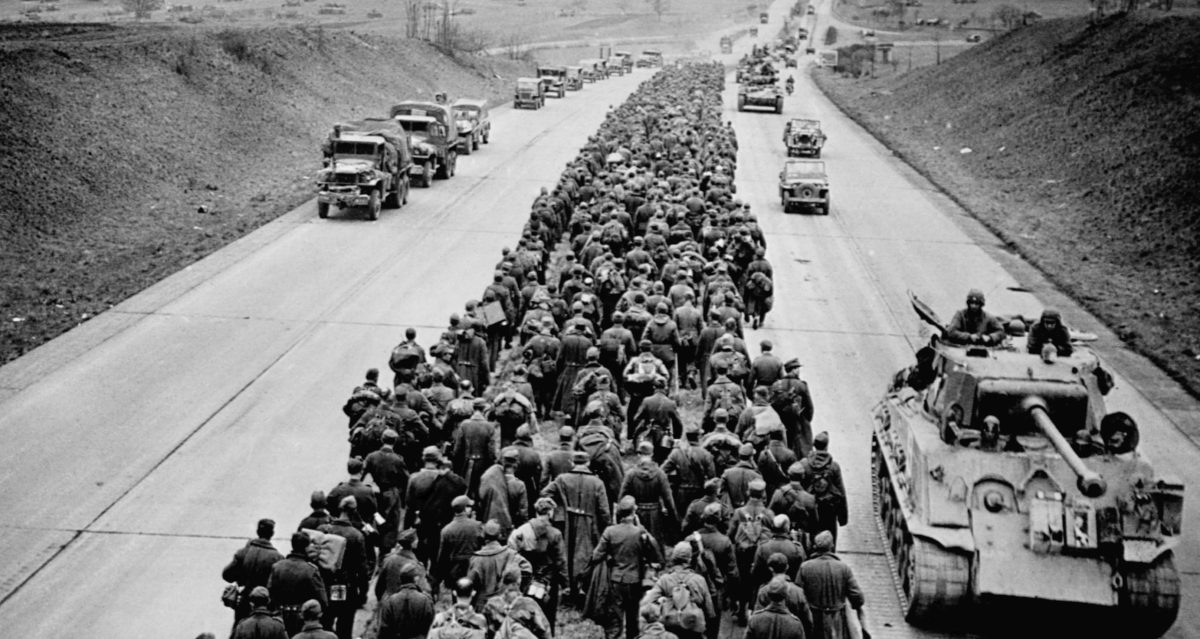
4 May 1945: Germany, Thousands of German prisoners march along a modern German superhighway while their allied captors travel in tanks, trucks, and jeeps. (CORBIS)
Share This Article

For the next year, a dedicated group of Americans worked closely with handpicked German POWs—all anti-Nazi intellectuals—to create and dispense material that subtly, and sometimes not so subtly, touted American culture and values. The program overcame entrenched opposition from Nazis and some camp commanders, leading to swift and, in some cases, radical changes in the tenor of camp discourse. In fact, after the death of President Roosevelt in April 1945, prisoners at a previously pro-Nazi camp in Arizona got together and sent a sincere letter of condolence to the army. A few weeks later, after the surrender of Germany, several thousand POWs actually volunteered to join up and fight against Japan.

But that wasn’t the end of it. The program was then retrofitted to reeducate and train certain POWs to help staff the military government responsible for the occupation of Germany—in essence, to give future German officials and policemen a crash course in democracy. The goal, said the program’s director, “was to return these prisoners to their war-torn homeland as a spearhead of democracy.”

Lt. Col. Edward Davison, a distinguished forty-six-year-old Scottish-born poet and university professor, was appointed to direct the new Special Projects Division, which conducted the program. His deputy was Mrs. Roosevelt’s recent guest, Major McKnight. Together, they “collected a group of leaders and educators who would make any university proud,” wrote Judith Gansberg in her history of the program, Stalag: U.S.A. (Crowell, 1977). The intellectuals, lawyers, and professors included a civilian adviser: the distinguished Harvard dean Howard Mumford Jones. One of them later noted in jest, “Long was the hair that flowed over the desks of the Special Projects Division.”

Davison and his staff brought a humanist perspective to their task, intending to educate through rational persuasion rather than psychological manipulation. This approach invited later criticism because it excluded psychologists and sociologists who presumably would bring skills in behavior modification.

Davison set up shop on Broadway in Lower Manhattan to get away from the War Department and to be near New York media experts. But his actual working headquarters was a place dubbed “the Idea Factory.” It was first situated in October 1944 at Camp Van Etten, a former Civilian Conservation Corps camp in upstate New York, then moved to Fort Kearney, Rhode Island, a former coal artillery post in Narragansett Bay. The Factory was home to a remarkable assemblage of eighty-five German POWs. Already identified as dedicated anti-Nazis, they were former editors, professors, writers, and linguists. At the Factory they worked to produce, edit, or review books, newspapers, films, and other media in order to reeducate their countrymen interned in nearly five hundred POW camps across the United States.

The Germans selected for the Factory did not in any way typify their fellow POWs. They tended to be intellectuals who were alienated not only from other POWs but from German society as well. This would later become a source of criticism from some American historians who questioned whether they could communicate effectively with the rank and file.

The Factory proved to be the world’s most relaxed prison camp. The prisoners renounced their military ranks and treated one another as equals. Fort Kearney had no armed guards or guard towers. The Germans would travel from there in army trucks on the ferry to Jamestown, Rhode Island, to pick up supplies, socializing with civilian passengers who had no idea they were chatting with POWs. “Once in a while we’d have to sort of jack them up and make sure they kept their beds neat—try to keep it very military and correct,” recalled Capt. Robert Kunzig, one of the Kearney commanding officers.

[continued on next page]
Pages: 1 2 3 4 5 6 7
Share This Article
by Ronald H. Bailey

more by Ronald H. Bailey

    Dive deeper

    • Nazis
    • Prisoners of war (POWs)
    • Psychology

    Citation information

    Ronald H. Bailey (2/25/2026) The Secret and Controversial Attempt to Teach German POWs About Freedom. HistoryNet Retrieved from https://historynet.com/the-secret-and-controversial-attempt-to-teach-german-pows-about-freedom/.
    "The Secret and Controversial Attempt to Teach German POWs About Freedom."Ronald H. Bailey - 2/25/2026, https://historynet.com/the-secret-and-controversial-attempt-to-teach-german-pows-about-freedom/
    Ronald H. Bailey 9/11/2008 The Secret and Controversial Attempt to Teach German POWs About Freedom., viewed 2/25/2026,<https://historynet.com/the-secret-and-controversial-attempt-to-teach-german-pows-about-freedom/>
    Ronald H. Bailey - The Secret and Controversial Attempt to Teach German POWs About Freedom. [Internet]. [Accessed 2/25/2026]. Available from: https://historynet.com/the-secret-and-controversial-attempt-to-teach-german-pows-about-freedom/
    Ronald H. Bailey. "The Secret and Controversial Attempt to Teach German POWs About Freedom." Ronald H. Bailey - Accessed 2/25/2026. https://historynet.com/the-secret-and-controversial-attempt-to-teach-german-pows-about-freedom/
    "The Secret and Controversial Attempt to Teach German POWs About Freedom." Ronald H. Bailey [Online]. Available: https://historynet.com/the-secret-and-controversial-attempt-to-teach-german-pows-about-freedom/. [Accessed: 2/25/2026]

    Related stories

    Stories

    Celebrating the Legacy of the Office of Strategic Services 82 Years On

    From the OSS to the CIA, how Wild Bill Donovan shaped the American intelligence community.

    ww2-homefront-poster-war-bond
    Portfolio

    During the War Years, Posters From the American Homefront Told You What to Do — And What Not to Do

    If you needed some motivation during the war years, there was probably a poster for that.

    ww2-termoli-italy-pow-boat
    Feature

    An SAS Rescue Mission Mission Gone Wrong

    When covert operatives went into Italy to retrieve prisoners of war, little went according to plan.

    ww2-505-parachute-infantry
    Feature

    Could These American Paratroopers Stop the Germans from Reaching Utah Beach on D-Day?

    The peaceful French countryside around La Fiere Bridge erupted into a desperate firefight on June 6, 1944.

    HistoryNet
    • Facebook
    • Twitter
    • Instagram
    • YouTube

    “History is a guide to navigation in perilous times. History is who we are and why we are the way we are.”

    David McCullough, author of “1776”

    HistoryNet.com is brought to you by HistoryNet LLC, the world’s largest publisher of history magazines. HistoryNet.com contains daily features, photo galleries and over 25,000 articles originally published in our nine magazines.

    Our Magazines

    • American History
    • America’s Civil War
    • Aviation History
    • Civil War Times
    • Military History
    • Military History Quarterly
    • Vietnam
    • Wild West
    • World War II

    About Us

    • What Is HistoryNet.com?
    • Advertise With Us
    • Careers
    • Meet Our Staff!

    Stay Curious

    Subscribe to receive our weekly newsletter with top stories from master historians.

    sign me up!

    © 2026 HistoryNet.
    • Privacy Policy
    • Terms of Service