
Bucking broncs mean big bucks.
In the American West, cowboys exhibited particularly enterprising spirit. They had to rely on riding and roping steers and horses to eke out a living on the range. When they completed a day’s work, they gathered and used the same skills in friendly competitions. It has been said that rodeo is the only sport to have found its origin in industry.
“Rodeos were a test of skill on the part of the cowboys,” explains Scott Anderson, assistant archivist at the Sharlot Hall Museum in Prescott, Ariz. “It was also an opportunity for people to get together on a day off. It was very informal and grew from there.” According to Win Blevins’ Dictionary of the American West, a rodeo (pronounced roh-DAY-oh) was a term used in the Southwest for the gathering of cattle (roundup), and later rodeo (now pronounced ROH-dee-oh) became “a competition among cowboys of roping and riding skills that were originally developed from working cows.”
Gradually, these gatherings expanded in size. Though they were not yet commercial, the events became increasingly formal. The earliest rodeos were generally July 4th celebrations, demonstrations at cattlemen’s conventions and old settlers’ reunions. They usually featured steer roping and saddle-bronc riders. Townspeople attended these events—a telltale sign that somebody would figure out how to turn a dollar on such an event.
According to some accounts, rodeo was born in 1864 when cowboys from the Hash Knife Ranch competed against cowboys from the Mill Iron Ranch in Deer Trail, Colorado Territory, to settle an argument over who was best at their jobs. The winning bronc rider, Emilnie Gardenshire of the Mill Iron, received a new suit of clothes, along with the title “Champion Bronco Buster of the Plains.” Actually, that event seems to have been held five years later at that same location, 54 miles east of Denver. In fact, the Colorado Legislature in 1969 passed a resolution that “declared the first rodeo held in the world was in Deer Trail, Colorado, on July 4, 1869.” However, some credit should go to the Mexican riders who were competing in charreadas many years before rodeos appeared in the United States. Among the most skilled riders in the Southwest in the 19th century were vaqueros.
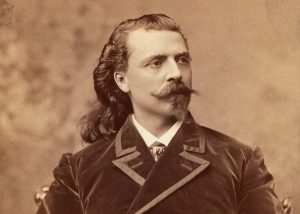
Rodeo clearly had potential. Entrepreneurs elsewhere took note. In North Platte, Neb., Buffalo Bill Cody staged a July 4, 1882, event dubbed “Old Glory Blowout,” during which participants essentially demonstrated their riding and roping skills. In his book Chasing the Rodeo: On Wild Rides and Big Dreams, Broken Hearts and Broken Bones, and One Man’s Search for the West, W.K. Stratton writes, “For all practical purposes, rodeo as a profitable spectator sport can be traced back to the Independence Day celebrations in 1882 in North Platte.” Cody had already made himself famous as a showman, performing in theaters beginning in the 1870s. Stratton goes on to explain:
So he [Cody] was a natural choice to chair the Fourth of July committee in 1882, when his hometown of North Platte, Nebraska wanted to stage a bigger than life patriotic celebration. Cody’s Old Glory Blowout left no one in North Platte disappointed. As part of the Blowout, he persuaded businesses to donate prizes for roping, shooting, riding, and bronc-busting events, which Cody would eventually call feats of “Cowboy fun.”
These events showcased the skills of cowboys in an atmosphere filled with patriotism, foreshadowing the larger commercial rodeos in the years to come. In her book Rodeo: An Anthropologist Looks at the Wild and the Tame, Elizabeth Atwood Lawrence writes: “He [Cody] expected to attract about a hundred cowboy contestants, and actually got a thousand. This unprecedented and unexpected success gave him the impetus for his future enterprise [Buffalo Bill’s Wild West]. Thus 1882 marks the beginnings of both the Wild West show and one part of its successor—rodeo.”
In 1883, with ambitions to expand his enterprise, Buffalo Bill Cody took his Wild West show on the road. Most of the American population was exposed to cowboy competitors as well as entertainers and, as they grew in popularity, the extravaganzas went international. At that time, women first appeared as contestants in rodeos, and black cowboys were not always shut out. “It had a leveling effect,” says Richard Rattenbury, curator of history at The National Cowboy & Western Heritage Museum in Oklahoma City. “Rodeo was one of the first sports where women could prove themselves.”
When first rodeos are discussed, the so-called West of the Pecos often comes up, most often in Texas. Pecos, more than 200 miles from El Paso and more than 400 miles from Fort Worth, hosted that event on July 4, 1883 (and continues to host it). The West of the Pecos might be true to its “the world’s first rodeo” billing in that it seems to have been the first such event to award a cash prize. Rodeos, which were usually called “cowboy tournaments” in those days, also appeared elsewhere in the West. One of these took place in Prescott, Arizona Territory, on July 4, 1888. Admission was charged, and a silver trophy was presented to best cowboy Juan Leivas for winning the steer roping and tying for first in bronco riding. In 1913 the competition became part of Prescott Frontier Days, although the term “rodeo” for a cowboy tournament wasn’t used in Prescott until 1924 (or apparently anywhere else earlier than 1916). The main event at today’s Prescott Frontier Days is called the World’s Oldest Rodeo, the name having been approved and registered by the U.S. Patent Office in 1985. Another Arizona community, Payson, also held cowboy competitions beginning in 1884, but these were said to have been much less formal gatherings.
Meanwhile, the types of shows that Buffalo Bill Cody had introduced in the early 1880s continued to keep the Wild West alive through the end of the 19th century and into the 20th century. George W. Miller founded the famous 101 Ranch in Oklahoma Territory in 1892, and impromptu cowboy competitions subsequently took place on the 110,000-acre spread. In 1908 his sons George Lee, Joseph and Zack began the Miller Brothers’ 101 Ranch Wild West Show, with many of the performers actually working on the ranch as well—including Bill Pickett, the black cowboy who invented bulldogging (steer wrestling).
Competitions among cowboys were fast becoming more mercenary than in the early days on the range when cowboys whiled away downtime with friendly contests. Commercialism was now part of the program. By the early 20th century, the “Daddy of ’em All” extravaganza was going strong in Cheyenne, Wyo., after beginning as a one-day rodeo on September 23, 1897. Cheyenne Frontier Days tapped into what it was like to be a cowboy and gave competitors and visitors alike the chance to “go cowboy” by offering the biggest purses and the biggest Western spectacle. By 1915 rodeos had become annual happenings and big business not only in Cheyenne but also in Pendleton, Calif. (the Pendleton Roundup), and Calgary, Alberta, Canada (the Calgary Stampede). These major rodeo events, and smaller ones, too, would come to offer saddle-bronc riding, bareback riding, calf roping, steer roping, bull riding, steer wrestling, team roping, barrel racing and a whole lot more. Wild West shows would die out (movies had something to do with that), but rodeos would live on. The Rodeo Association of America was founded in 1929, giving structure to the business/ sport.
Today, there are about 800 sanctioned rodeos per year in the United States. The sport is run under the auspices of the Professional Rodeo Cowboys Association. The PRCA has grown into a multimillion dollar business, with coverage of its events splattered across televisions and newsstands nationwide. Some of the contestants have made in excess of a million dollars over the course of their careers. “It has gone from a pickup sport to a business,” says Rattenbury. “They are more professional athletes today than they are cowboys.” And their rides are far more prosperous than they ever were on the range.
Originally published in the June 2007 issue of Wild West. To subscribe, click here.