

At Waynesborough, Georgia, Fighting Joe Wheeler’s Rebels get a rough time from a very unlikely foe — Brig. Gen. Judson Kilpatrick.
By Angela Lee
At Waynesborough, Georgia, Fighting Joe Wheeler’s Rebels get a rough time from a very unlikely foe — Brig. Gen. Judson Kilpatrick.
By Angela Lee
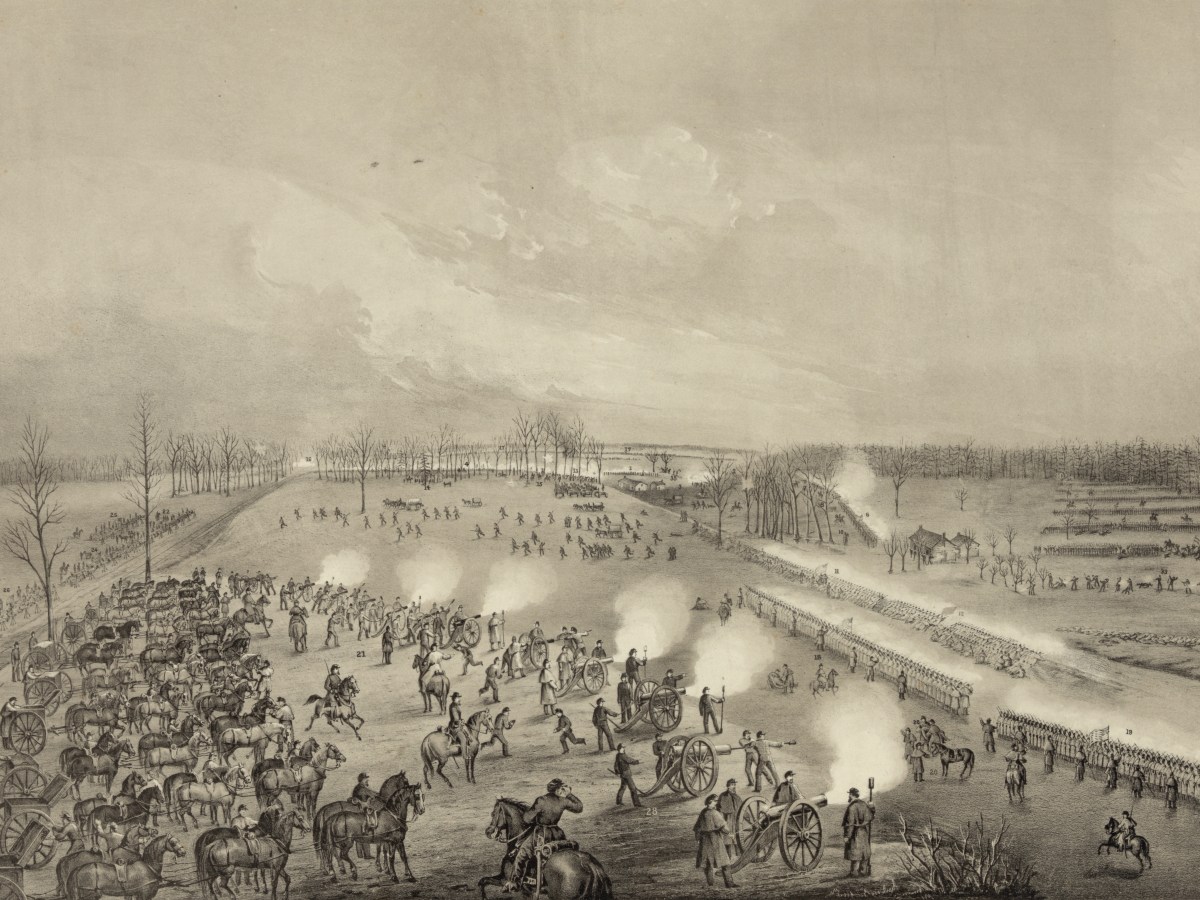
While an unwary Union artillery captain — Warren P. Edgarton — took his horses for water, 4,400 battle-hardened Confederates were massing to unleash a devastating pre-dawn attack.
By Robert C. Cheeks
With Union Major General Joseph Hooker’s I Corps lying shattered in the blood-soaked cornfield at Antietam, Brigadier General George Greene’s ‘Bully Boys’ somehow managed to punch a salient in the Confederate line. But would they be able to hold it?
By Robert C. Cheeks
Near the sluggish creek on the outskirts of Atlanta, new Confederate commander John Bell Hood struck the first ‘manly blow’ for Atlanta,living up to his lifelong reputation as a fighter–but accomplishing little. It would be a bad omen for all Hood’s subsequent campaigns.
By Phil Noblitt
Confederate General Earl Van Dorn expected to march breezily through Missouri, capture St. Louis and fall on Ulysses S. Grant in Tennessee. But at Elkhorn Tavern in northern Arkansas, an outnumbered Union force had other ideas.
With Union General John Pope reeling in defeat after the Battle of Second Manassas, Stonewall Jackson confidently set out to block Pope’s retreat. It would be easy pickings–so Jackson thought.
By Robert James
Back and forth, for 24 hours, soldiers at Gettysburg contested possession of a no man’s land with an incongruous name–Bliss farm.
By John M. Archer
If Robert E. Lee’s bold plan of attack had been followed on Day 2 at Gettysburg, there might never have been a third day of fighting. As it was, confusion and personal differences between commanders would severely affect the Confederate assault on Cemetery Ridge.
Ulysses S. Grant sent his trusted cavalry commander Phil Sheridan to flank Robert E. Lee out of Petersburg. The crossroads hamlet of Dinwiddie Court House soon became the focal point for one of the most pivotal cavalry battles of the war.
By Mark J. Crawford
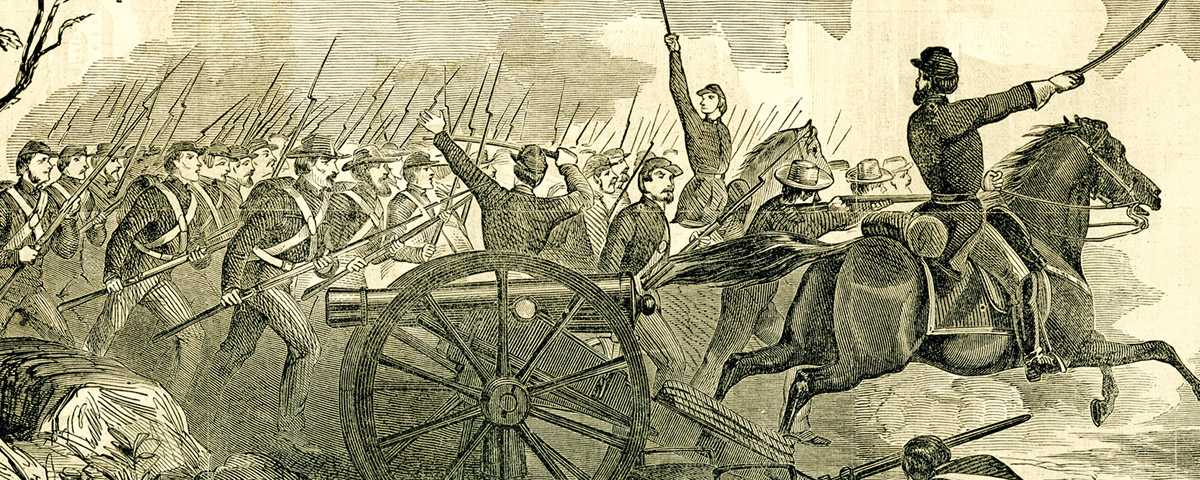
With Union and Confederate troops jockeying for position in neutral Kentucky, an inexperienced brigadier general — Ulysses S. Gran- – led his equally green Federal troops on a risky foray along the Kentucky-Missouri border.
By Max Epstein