

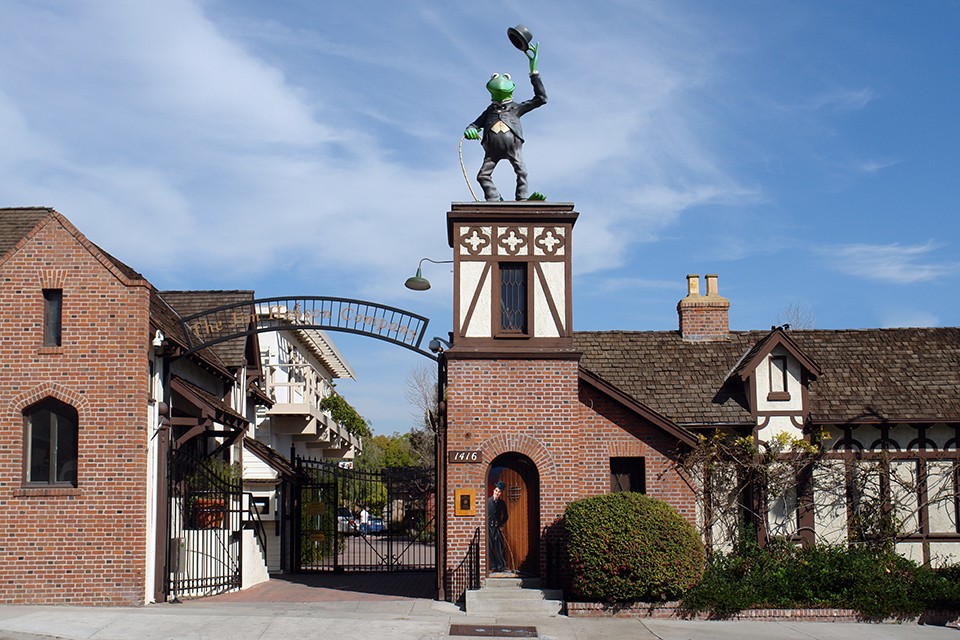
HENSON STUDIOS honors the builder of one of LA’s oldest production lots by dressing Kermit the Frog like Charlie Chaplin’s Little Tramp. In 1917, when the actor/director/producer bought acreage at 1416 North LaBrea Avenue in Los Angeles, the property was an orange grove. Chaplin marked his turf with a signature and shoeprints splayed Tramp-style in concrete near the soundstage on which he made Gold Rush, The Great Dictator, and many more. In 1960, Red Skelton began taping his TV show on-premises—and moved Chaplin’s signed sidewalk to his Palm Springs pad. Skelton sold to CBS, which produced TV series Perry Mason at 1416. In 1966 A&M Records arrived, adding studios. Quincy Jones secretly convened 50 music stars at A&M to record 1985’s “We Are the World.” The Hensons, owners since 1999, restored Chaplin’s screening room and film lab—and reproduced the Chaplin signature slab. A trompe l’oeil image of Chaplin graces a door in Kermie’s gatehouse. The lot is closed except when someone rents the courtyard or soundstage, but a tour of the historic property awaits here:
Related stories
10 Pivotal Events in the Life of Buffalo Bill
William Frederick Cody (1846-1917) led a signal life, from his youthful exploits with the Pony Express and in service as a U.S. Army scout to his globetrotting days as a showman and international icon Buffalo Bill.
The One and Only ‘Booger’ Was Among History’s Best Rodeo Performers
Texan Sam Privett, the colorfully nicknamed proprietor of Booger Red’s Wild West, backed up his boast he could ride anything on four legs.
The Top Books and Films About Buffalo Bill Cody
Steve Friesen, the former director of the Buffalo Bill Museum & Grave in Colorado, assesses what has been written and filmed.
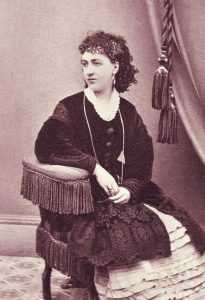
This Victorian-Era Performer Learned that the Stage Life in the American West Wasn’t All Applause and Bouquets
Sue Robinson rose from an itinerant life as a touring child performer to become an acclaimed dramatic actress.